Scroll to Top
pictogram-ce.png

EN ISO 21420:2020

GENERAL REQUIREMENTS FOR
PROTECTIVE GLOVES

EN ISO 21420 is the standard that defines the general requirements to be met by any glove or other type of equipment for hand and/or arm protection.

This standard should always be used in combination with other standards.

It does not serve by itself to certify a glove.

The standard basically defines the performance, requirements and test methods to be applied for:

  • BASIC DESIGN
  • INOCUITY
  • CLEANING ANTI-STATIC PROPERTIES, AS A POSSIBLE ADDITIONAL PROPERTY
  • SIZES
  • DEXTERITY
  • COMFORT AND BREATHABILITY
  • MARK
  • MANUFACTURER'S INFORMATION

BASIC DESIGN

  • The glove must be designed and manufactured according to the foreseeable conditions of use.
  • The user should be able to carry out his activity as normally as possible with the appropriate protection.
  • The glove material and stitching shall be appropriate to meet the protection objectives of the PPE.

INOCUITY

  • The glove will have no adverse effects on the user's health.
  • The content of Chromium VI in leather gloves shall be less than 3.0 mg/kg leather.
  • Metallic components in prolonged contact with the user's skin will have a nickel release of less than 0.5 μg/cm.2 per week.
  • The pH value of any component shall be between 3.5 and 9.5.
  • No azo dyes will be detected.
  • In possible PU components, the DMFa level shall not exceed 1000 mg/kg.
  • In the possible plastic or rubber components, the level of PAHs defined in the standard shall not exceed 1 mg/kg.

CLEANING

  • After the gloves have been cleaned according to the manufacturer's instructions, the protection levels will be maintained.

ANTI-STATIC PROPERTIES

  •  For gloves to be used in potentially flammable or explosive areas, gloves should be tested according to EN 16350.

SIZES

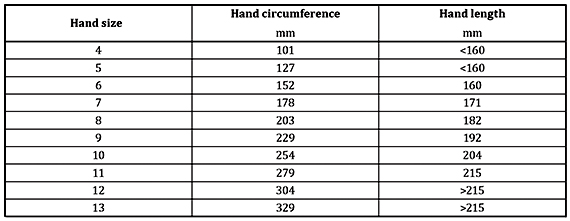
  • The size of the glove shall be defined by the size of the circumference of the hand at the knuckle, as shown in the table included in Annex B of the standard and the length of the glove, regardless of specific standards defining specific lengths, shall cover the length of the hand for each size (see Table 1).

DEXTERITY

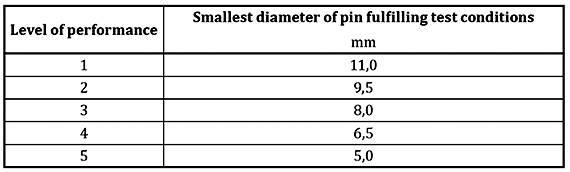
  • The level of dexterity will be defined by the diameter of the smallest rod that an experienced technician can pick up during the test (see Table 2).

COMFORT AND BREATHABILITY

  • Where possible, gloves shall allow a water vapor transmission of at least 5 mg/(cm) of water vapor.2-h) for leather gloves and for textile gloves, the resistance to water vapor shall be less than or equal to 30 m (30 ft).2-Pa/W.
  • When the characteristics of the glove do not allow perspiration, an adequate level of absorption shall be ensured. In leather gloves, this level shall be at least 8 mg/cm.2 for 8 h.
  • If the glove, due to its structure, cannot have an adequate level of breathability and absorption, this characteristic shall be clearly indicated in the Manufacturer's Information.

MARK

  • The glove shall have the following markings, visible and legible for the foreseeable lifetime of use:
  1. Name or trademark of the manufacturer or authorized distributor.
  2. Product reference.
  3. Glove size.
  4. Pictogram of the type of protection offered by the PPE, indicating the standard it complies with and the protection levels achieved.
  5. Date of manufacture in month and year.
  6. If applicable, expiration date of the product.

MANUFACTURER'S INFORMATION

  • The manufacturer or authorized supplier shall attach the following information to the PPE:
  1. Name and complete address of the manufacturer or authorized distributor.
  2. Product reference.
  3. Range of sizes in which the glove is manufactured.
  4. Reference to the standards that the PPE complies with.
  5. Pictogram appropriate to the type of protection and, if applicable, levels reached.
  6. Information if the protection only applies to a specific part of the hand.
  7. Limitations and hazards of use, e.g. with rotating machines.
  8. Washing instructions.
  9. Storage instructions.
TABLE 1 - SIZES ACCORDING TO HAND DIMENSIONS
TABLE 2 - DEXTERITY LEVELS
ACCORDING TO THE DIAMETER OF THE SMALLEST ROD
pictogram-ce-hammer-without-background.png

EN 388:2016+A1:2018

GLOVES FOR PROTECTION AGAINSTMECHANICAL RISKS

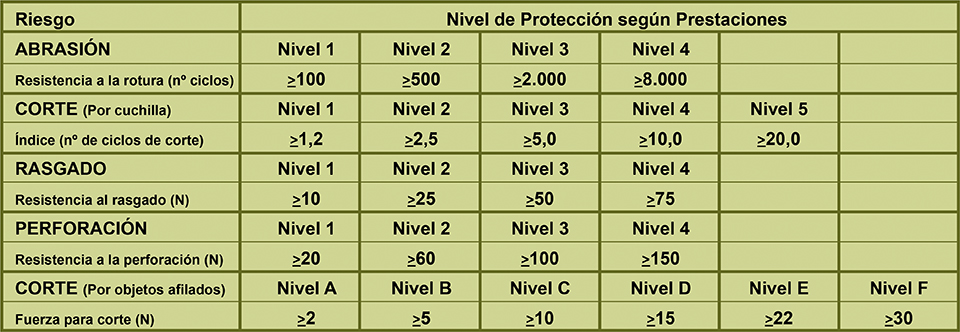
EN 388 is the standard commonly used to define cut protection levels, including other mechanical hazards, for gloves and other hand and/or arm protection products, such as sleeves.

The standard provides for five tests to cover four different mechanical hazards:
  • ABRASION
  • CUTTING (Two tests: «Cuptest» and/or «TDMtest»)
  • RASGADO
  • DRILLING
It also includes an additional fifth risk:

  • IMPACT PROTECTION
Each test classifies the product into four levels of protection, except for the risk of cutting, which is classified as five, according to "Cuptest" (cut by blade) or six, according to "TDMtest" (cut by sharp objects).
A glove certified against mechanical hazards must meet at least "Level 1" ("Level A" for cutting by sharp objects) against one of the hazards defined in the standard.

Logically, the type and risk level of the glove must cover the risks and levels assessed in the relevant "risk assessment" of the workplace.

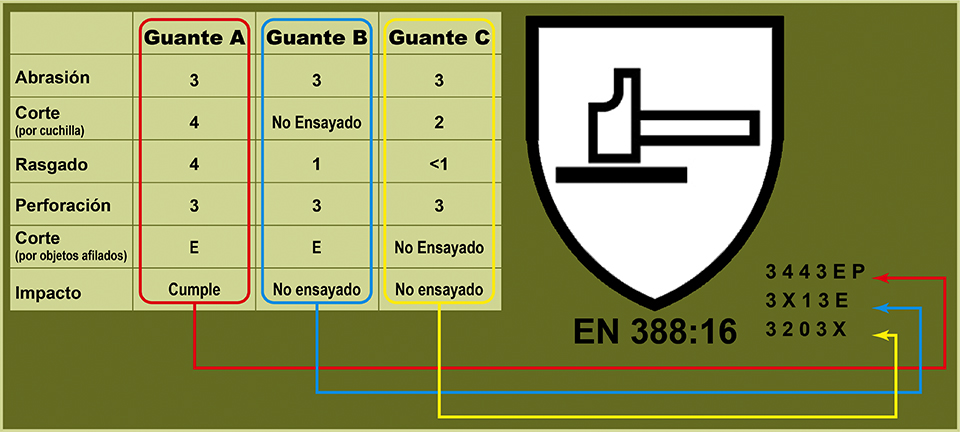
Gloves certified against mechanical hazards must be provided with the corresponding user information and incorporate the relevant «marking», as shown in the following examples
pictogram-ce-llama-without-background.png

EN 407:2020

PROTECTIVE GLOVES AND OTHER EQUIPMENT FOR HAND PROTECTION AGAINST THERMAL HAZARDS THERMAL HAZARDS

EN 407 is the standard used generically to define heat and/or flame protection levels for gloves and other hand and/or arm protection products, e.g. mittens or sleeves, for both industrial and domestic use.

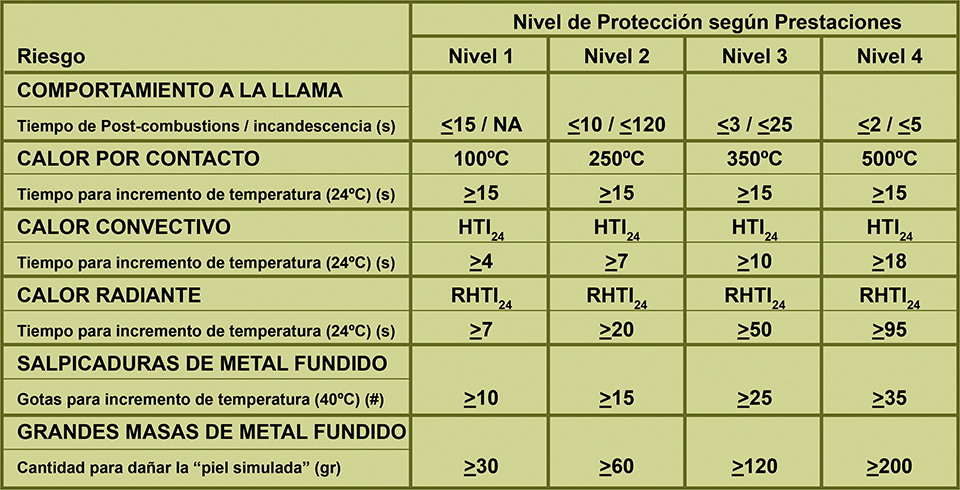
The standard contemplates six different thermal risks to be covered, applying different tests for each of them:
  • FLAME BEHAVIOR
  • CONTACT HEAT
  • CONVECTIVE HEAT
  • RADIANT HEAT
  • SMALL SPLASHES OF MOLTEN METAL
  • LARGE QUANTITIES OF MOLTEN METAL
Each test classifies the product into four levels of protection.
A glove certified against thermal risks must at least reach «Level 1» against one of the risks defined in the standard, apart from complying with other mechanical resistance and design requirements.

Logically, the type and risk level of the glove must cover the risks and levels assessed in the relevant «risk assessment» of the workplace.

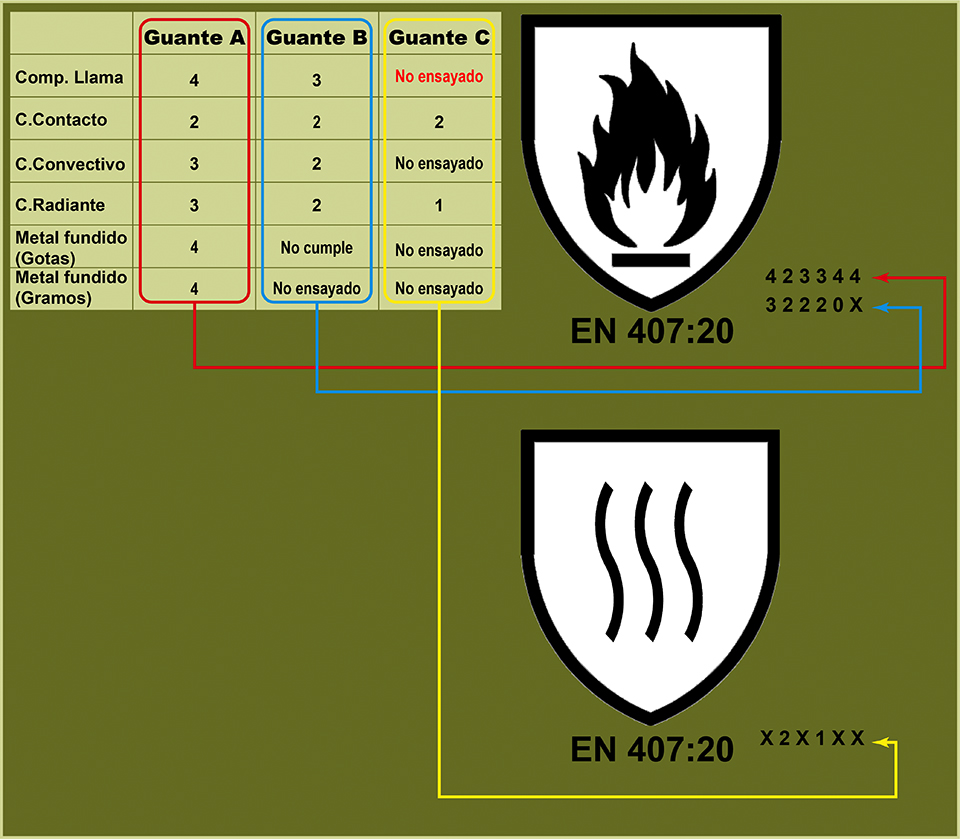
The gloves certified against thermal risks must include the corresponding information for the user and incorporate the relevant «marking», as shown in the following examples, with different pictograms depending on whether or not they comply with the requirements for «FLAME-BEARING BEHAVIOUR».»
pictogram-ce-moto-sierra-without-bottom.png

EN ISO 11393-4:2019

GLOVES FOR PROTECTION AGAINST
CHAIN SAW CUTTING

EN ISO 11393-4 is the standard that defines the requirements and test methods for gloves for protection against cutting by hand-held chainsaws.

The standard defines various construction options and protection classes for different chain speeds.

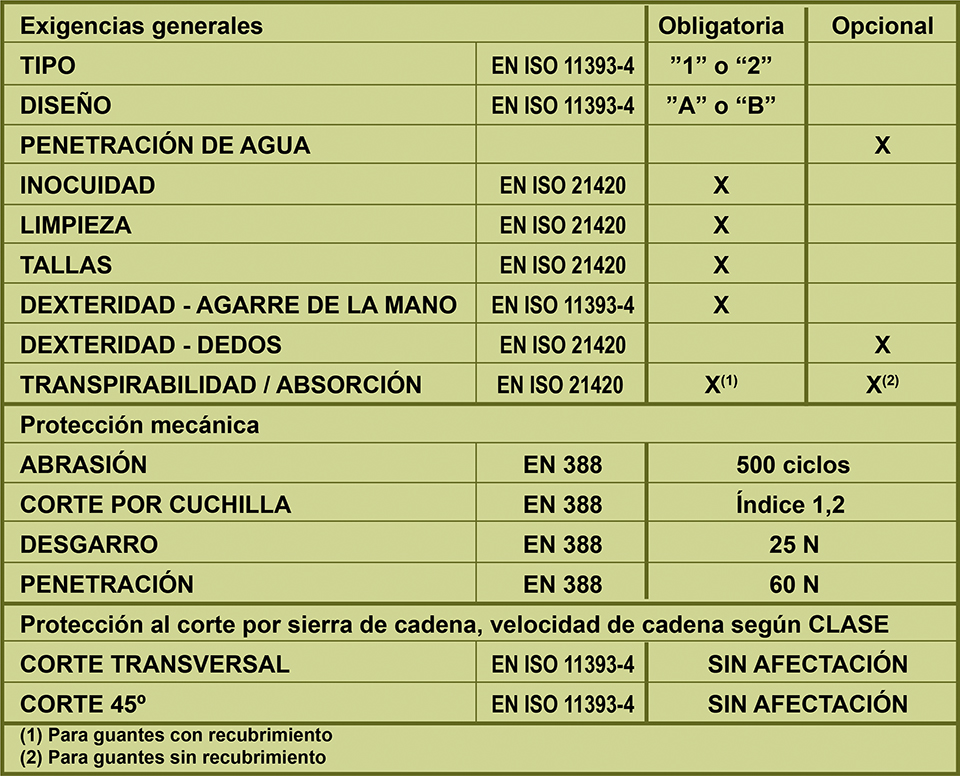
Gloves TYPE 1
With protection against cutting by chain saws on both hands

Gloves TYPE 2
With protection against cutting by chain saws on the left hand only

DESIGN A gloves
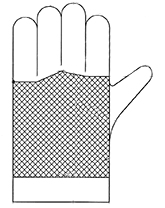
Gloves with metacarpal protection, no finger protection (see diagram)

DESIGN B gloves
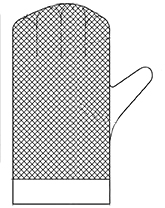
Gloves with protection on the entire back of the hand, fingers (except thumb) and metacarpals (see diagram).

CLASS 0 gloves
Tested with a chain speed of 16 m/s

CLASS 1 gloves
Tested with a chain speed of 20 m/s

CLASS 2 gloves
Tested at 24 m/s chain speed

CLASS 3 gloves
Tested with a chain speed of 28 m/s

TYPE, DESIGN or CLASS are not related to each other, the manufacturer can design PPE of any type.
DESIGN A
DESIGN B
Whatever the TYPE, DESIGN or CLASS, gloves against the risk of cutting by motor-saws must comply with a series of specific requirements:
Gloves certified against the risk of cutting by motor-saws must include the corresponding information for the user and incorporate the relevant «marking».»
en-511.png

EN 511:2006

GLOVES FOR PROTECTION AGAINST THE COLD

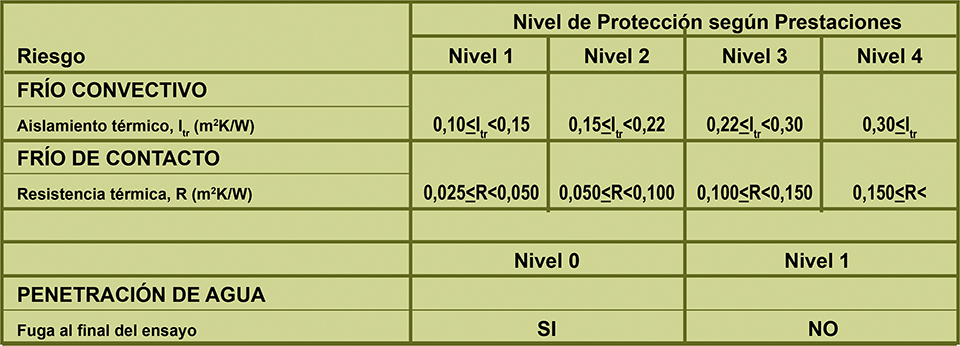
EN 511 is the standard that defines the performance levels for gloves protecting against cold up to -50°C, whether it is a risk associated with climatic conditions or an industrial activity.

The standard includes six basic tests:

  • MECHANICAL REQUIREMENTS
  • BENDING BEHAVIOR (1)
  • WATER PENETRATION
  • FLEXIBILITY TO EXTREME COLD (2)
  • CONVECTIVE COLD INSULATION
  • CONTACT COLD INSULATION

(1) - Not required for uncoated materials

(2) - This test applies to gloves for protection at temperatures below -30ºC.

Each insulation test classifies the product into four levels of protection.

A glove certified against cold must achieve at least «Level 1» against convective or contact cold.

Logically, the type and risk level of the glove must cover the risks and levels assessed in the relevant «risk assessment» of the workplace.

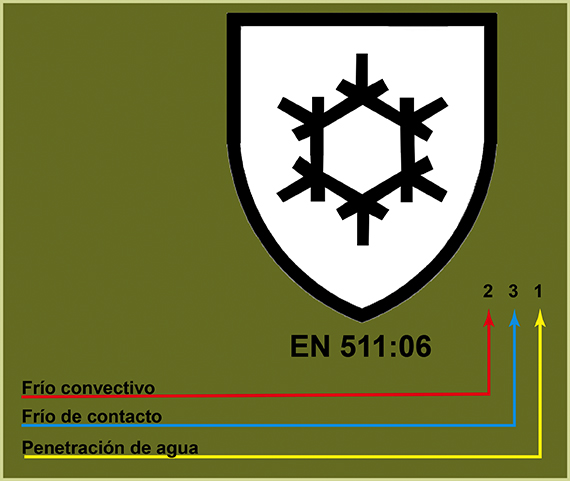
Gloves certified for cold protection must be accompanied by appropriate user information and incorporate the relevant «marking», as shown in the following examples.

en-659-frame-marked.jpg

EN 659:2003+A1:2008

PROTECTIVE GLOVES
FOR FIREFIGHTERS

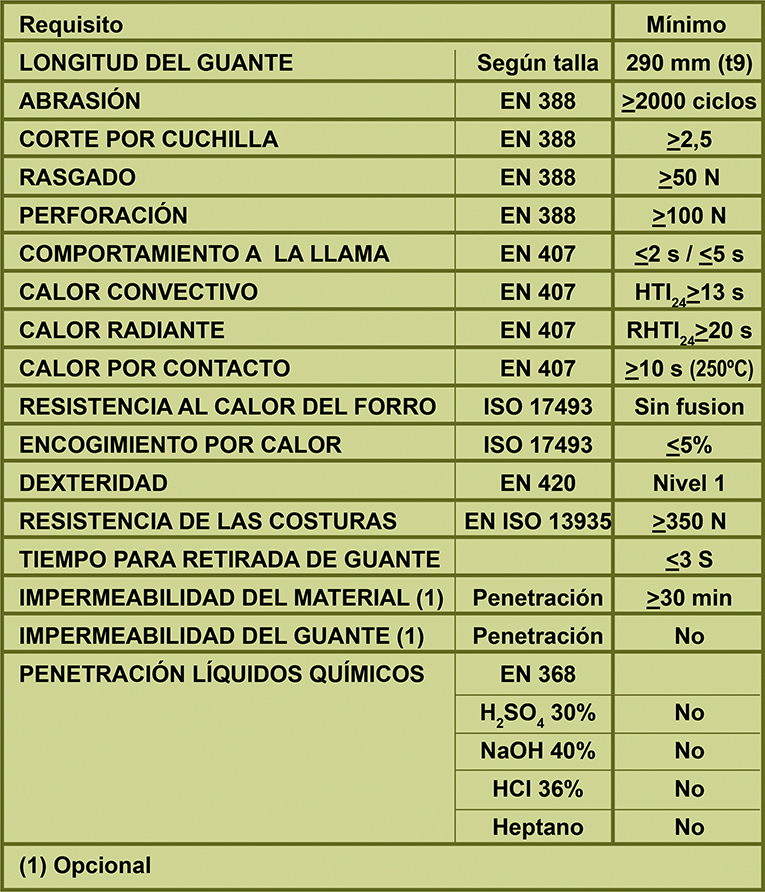
EN 659 is the standard used to define the performance of protective gloves for firefighters.

The standard provides for multiple specific minimum requirements that firefighting gloves must meet:

  • GLOVE LENGTH
  • ABRASION
  • KNIFE CUTTING
  • RASGADO
  • DRILLING
  • FLAME BEHAVIOR
  • CONVECTIVE HEAT
  • RADIANT HEAT
  • CONTACT HEAT
  • HEAT RESISTANCE OF THE LINING
  • HEAT SHRINKAGE
  • DEXTERITY
  • SEAM STRENGTH
  • TIME FOR GLOVE REMOVAL
  • IMPERMEABILITY OF THE MATERIAL (OPTIONAL)
  • GLOVE WATERPROOFING (OPTIONAL)
  • PENETRATION OF CHEMICAL LIQUIDS
Protective gloves for firefighters must meet all the defined minimum requirements (except for the optional ones) and be supplied with the corresponding information for the user and incorporate the relevant «marking».»
pictogram-ce-llama-without-background.png

EN 12477:2001+A1:2005

PROTECTIVE GLOVESFOR WELDERS

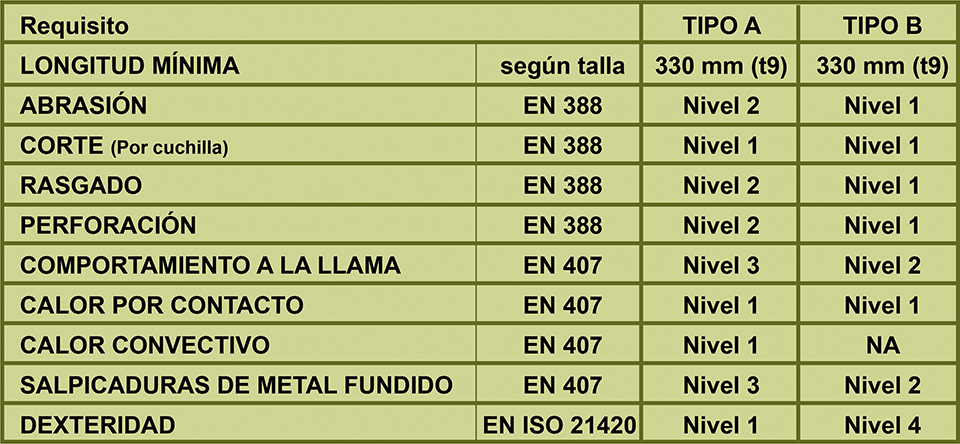
EN 12477 is the standard used to define the performance of protective gloves for welders.

The standard includes ten specific minimum requirements for two different types of welding:

TYPE A

for welding requiring maximum protection

TYPE B

for welding requiring high dexterity (e.g. TIG)

  • GLOVE LENGTH
  • ABRASION
  • KNIFE CUTTING
  • RASGADO
  • DRILLING
  • FLAME BEHAVIOR
  • CONTACT HEAT
  • CONVECTIVE HEAT
  • SMALL SPLASHES OF MOLTEN METAL
  • DEXTERITY
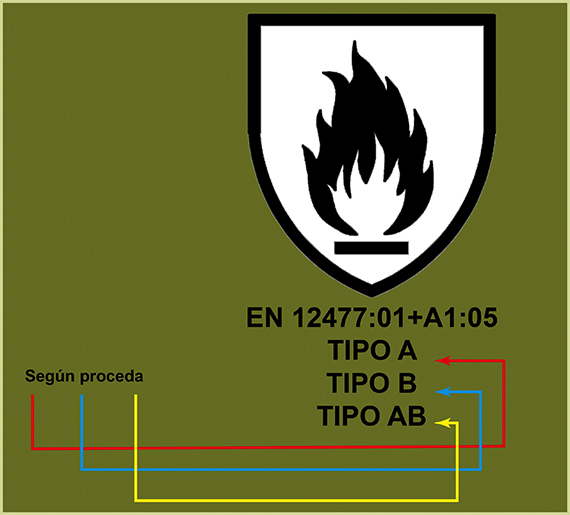
Gloves certified as protective gloves for welders must include the corresponding information for the user and incorporate the relevant «marking», as shown in the following example.
Moran Gloves
Privacy Overview

This website uses cookies so that we can provide you with the best user experience possible. Cookie information is stored in your browser and performs functions such as recognising you when you return to our website and helping our team to understand which sections of the website you find most interesting and useful.